
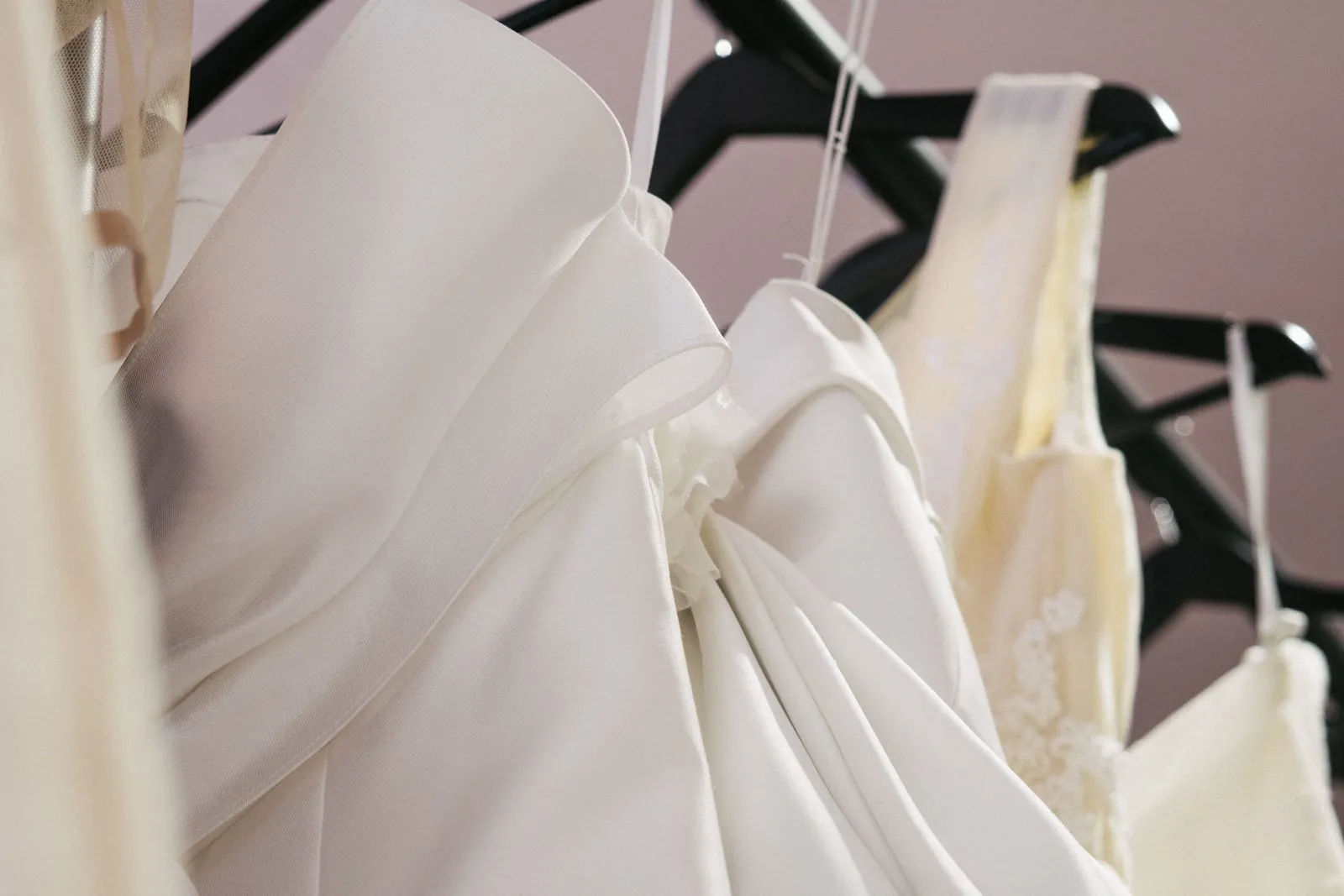
Choosing a more sustainable wedding dress doesn’t require finding a perfect gown or giving up the style you want. It means looking beyond the label to consider what the dress is made from, how it was sourced, and how long you might use it. A few clear questions can help you compare options calmly, whether you’re considering a new gown, a pre-owned find, or a design you can wear again.
Compare fabric choices
Start by checking the fiber content rather than relying on broad terms such as “eco-friendly.” Natural fibers like linen, hemp, and some cottons can be useful options, but their impact depends on how they were grown, processed, and finished. Silk is also a natural fiber, though its production methods vary. Ask the boutique for specific material details and any documentation it can provide.
Synthetic fabrics such as polyester and nylon are often made from fossil fuels, but they can be durable and may be available in recycled forms. Recycled content can reduce reliance on virgin material, though it doesn’t answer every question about processing, durability, or end-of-life disposal. Compare the actual fabric and construction, and consider whether the gown will hold up through alterations, cleaning, and future wear.
Look at how gowns are sourced
Ask whether a gown is made to order, produced in batches, or already in stock. Made-to-order production may avoid holding unsold inventory, but it still uses materials and resources. For any option, ask where the gown was made and whether the boutique can explain its supply chain. Clear, specific answers are more useful than a general sustainability claim.
Pre-owned, sample, and vintage gowns can extend the life of an existing dress. Check the condition, cleaning needs, and alteration history before deciding. A sample gown may have been tried on many times, while a pre-owned dress may need repairs or a new fit. Include those needs in your decision so you can judge the gown as a whole, not just by its purchase history.
Ask about construction and fit
A well-fitting gown can reduce the need for extensive alterations, extra materials, and repeated fittings. Ask which changes are realistic for the style and fabric, and whether the design allows room for adjustments. Find out who will do the work, what the process involves, and whether the boutique recommends a separate alterations specialist.
Look closely at seams, closures, lining, and embellishments. Ask whether details are sewn on or bonded, and whether the dress can be repaired if a seam opens or a fastener breaks. Construction that allows practical repairs may help you keep the gown in use longer. Also ask how to clean and store it without damaging delicate materials.
Plan for use after the wedding
Consider whether you want to preserve, resell, lend, donate, or alter the dress after the ceremony. A gown that can be shortened, dyed, or separated into pieces may offer more ways to wear it again, but changes depend on the fabric and design. Ask a seamstress what is feasible before choosing a dress with a specific second use in mind.
Bring a short list of questions to appointments: What fibers are in the gown? Where was it made? Is it new, a sample, or pre-owned? Can you share details about its sourcing? What alterations and cleaning will it need? What care instructions come from the maker? Answers may vary, and that’s okay—use them to compare options that fit your priorities, budget, and wedding plans.
A more sustainable choice comes from weighing fabric, sourcing, fit, construction, and future use together. You don’t need every answer to make a thoughtful decision; focus on the details that matter most to you and ask for clear information. If you’d like help comparing options, Willow & Thread can talk through gown choices and practical next steps.